The Asian Cultural Festival 31 July to 1 August 2026 celebrated the rich and diverse cultures of Asia through a vibrant showcase of food, music, dance, film, traditional performances and cultural exhibitions, offering participants a unique opportunity to experience the continent’s remarkable cultural heritage.
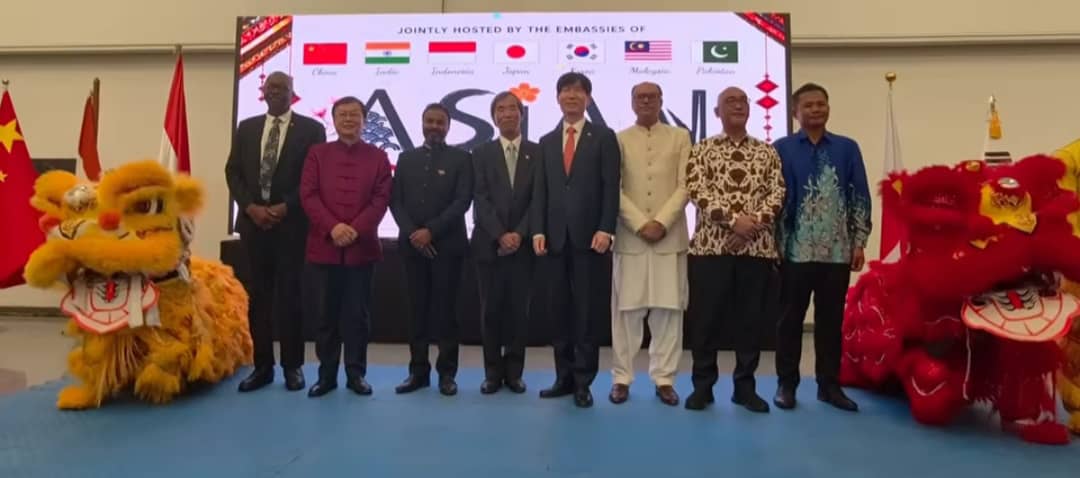
The festival opened with colourful performances by the seven participating Asian diplomatic missions representing the People’s Republic of China, the Republic of India, the Republic of Indonesia, Japan, South Korea, Malaysia and the Islamic Republic of Pakistan. Highlights included the spectacular Chinese Lion Dance, symbolising prosperity, good fortune and unity; South Korea’s dynamic Taekwondo demonstration; Indonesia’s vibrant Tari Piring (Plate Dance) and a variety of traditional dances and musical performances that reflected the diversity and vibrancy of Asian civilisation. These performances officially marked the opening of the cultural celebration.
The opening ceremony was attended by ambassadors and representatives of the participating diplomatic missions, members of the Diplomatic Corps, senior Government officials and invited guests. The Government of Zimbabwe was represented by Mr Mqabuko Spencer Dube, Director responsible for Africa, Asia and the Pacific in the Ministry of Foreign Affairs and International Trade. In their remarks, the Heads of Mission described the festival as an important platform for celebrating cultural diversity, strengthening friendship and promoting people-to-people relations between Asia and Zimbabwe. They further noted that this marked the “first Asian Cultural Festival jointly celebrated by the seven participating Asian countries”, describing it as a historic milestone and expressing their shared commitment to making it an enduring tradition that would continue to strengthen friendship, cooperation and mutual understanding between Asia and Zimbabwe.
Visitors also enjoyed an authentic Asian culinary experience, sampling Chinese burgers, dumplings and green tea; Japanese sushi; Pakistani biryani and Indonesian crackers, honey bombs, noodles and cappuccino, among many other delicacies. The culinary showcase complemented the performances by providing an immersive experience of Asia’s rich gastronomic traditions.
The second day focused on Asian cinema, featuring Filosofi Kopi (Indonesia), Nayab (Pakistan), Familyhood (South Korea), Andhadhun (India) and One and Only (Japan). Exploring themes of family, tradition, resilience, identity and personal ambition, the films offered valuable insights into the cultures and social values of the participating countries while demonstrating the role of cinema as a powerful instrument of cultural diplomacy and international understanding.
The festival concluded with a renewed appreciation of Asia’s rich cultural heritage and reaffirmed the important role of cultural diplomacy in promoting mutual respect, strengthening people-to-people relations and building lasting bridges between nations. Through music, dance, cuisine, film and cultural exchange, the Asian Cultural Festival demonstrated the enduring power of culture to foster dialogue, friendship and international cooperation.